
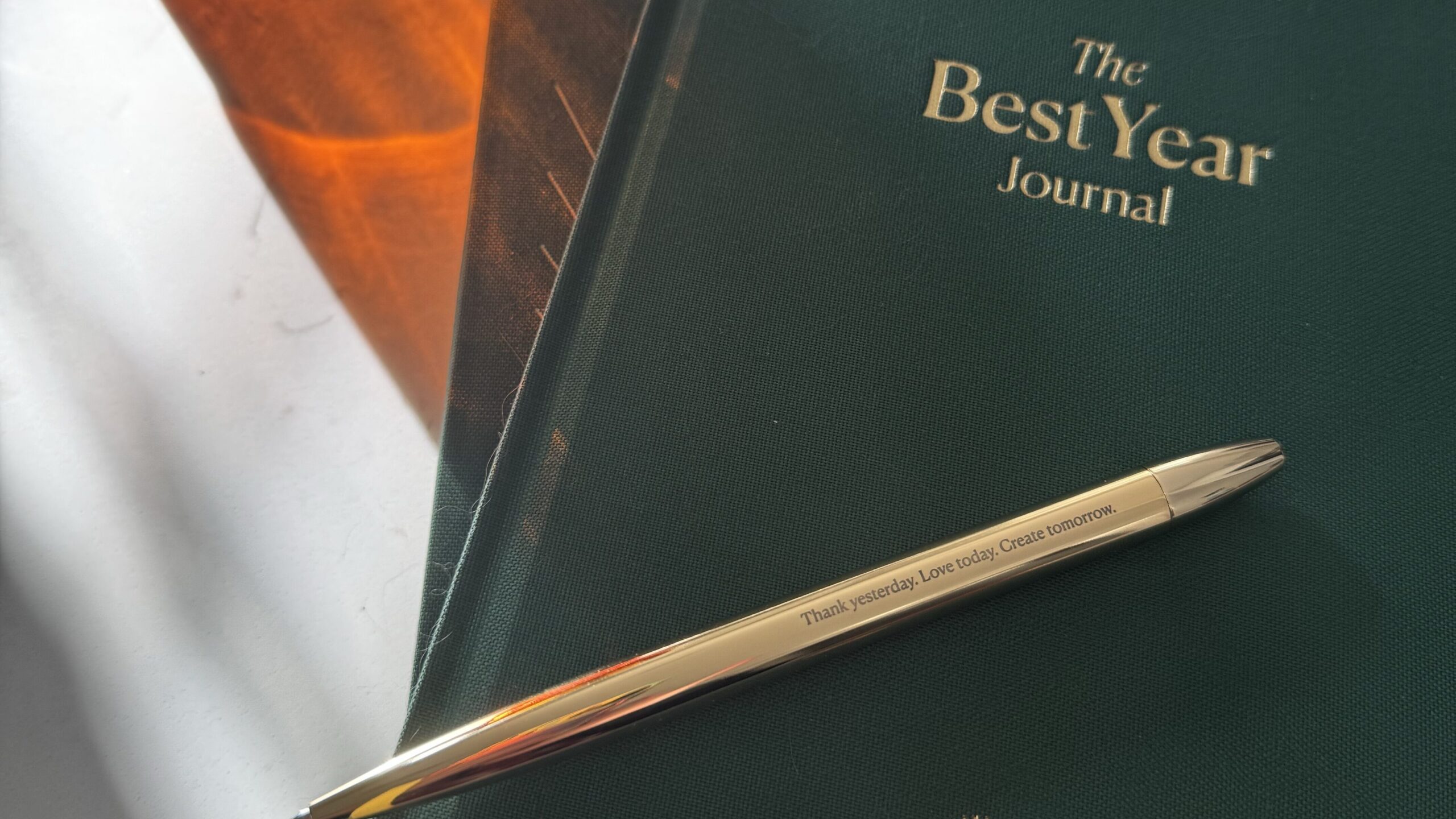
What a year it has been! What has this year been for you? As another year draws to a close, you might find yourself, like I do, somewhere in between “Where did the time go?” and “Thank goodness that’s over.” Before we go into this article, let’s get one thing straight: reflection on your year isn’t about being unfairly harsh on yourself. It’s about honest assessment, celebrating progress however small it might be, and moving forward with intention and realistic optimism.
Let’s explore how to meaningfully reflect on the year that’s passed and prepare for what’s ahead with both practicality and hope.
Why Year-End Reflection Matters
Reflection isn’t dwelling on the past. It’s the honesty that you owe your better self, as you work to become that person. It’s about using what you’ve learned to move forward more intentionally. Reviewing your year gives you the opportunity to plan the upcoming year strategically. This is where you recognise patterns and attitudes that may be holding you back, acknowledging what works and leaning into these insights for a better year ahead.
Without reflection, we risk repeating the same mistakes and missing opportunities to build on what’s actually working in our lives.
How to Review Your Goals from the Past Year
Start by pulling out whatever goals, intentions, or plans you set at the beginning of the year. Can’t find them? That’s okay and tells you something important right there.
Look at each goal honestly and ask yourself:
Did I achieve this goal? A simple yes or no is fine for now.
If yes, what made it possible? Was it accountability, the right timing, genuine motivation, or breaking it into smaller steps? Understanding your success formula helps you replicate it.
If no, why not? Be specific. Did circumstances change? Was the goal unrealistic? Did you lose interest because it wasn’t actually your priority? Did life throw curveballs?
Is this goal still relevant to me? Some goals deserve to be carried forward. Others were never really yours to begin with, perhaps borrowed from what you thought you should want rather than what you actually wanted.
This review isn’t about judgment. It’s about gathering data on yourself and your life so you can make better decisions moving forward.
Celebrate Your Wins, No Matter How Small
Be fair to yourself! You have done more than you are giving yourself credit for. As people, we’re notoriously terrible at acknowledging our own progress. We tend to minimize accomplishments and maximize failures, which is both unfair and counterproductive. So, strive to be objective in your retrospection. Take time to write down everything you actually accomplished this year. Include all your wins!
Small wins count. That workout habit you maintained for three months before it fizzled out? That’s three months of movement you wouldn’t have had otherwise. The book you read, the skill you developed, the difficult conversation you finally had, all matter.
Progress isn’t linear. Some of your biggest wins might be internal, invisible ones like setting boundaries, walking away from what wasn’t serving you, or choosing rest when you needed it.
Celebrating wins isn’t about ego. It’s about training your brain to recognize progress and building momentum for continued growth. Write these down somewhere you can revisit them when you’re struggling with motivation or self-doubt.
Be Honest About Your Failures and Setbacks
Now for the uncomfortable part: acknowledging what didn’t work. This is where you will look objectively at things that didn’t work. If you are truly honest with yourself, there will be areas that you identify as “room for improvement.” However, as you work through this, there’s something important to keep in mind: failures are feedback. Do not use this list as a reason to question your worth and capabilities.
What didn’t go according to plan? List it without sugar-coating, but also without spiraling into shame. Facts only.
What can you learn from each setback? Maybe that business idea taught you about market research. That failed relationship showed you what boundaries you need. That abandoned fitness goal revealed that 5am workouts will never be your thing, no matter how many motivational videos you watch.
Which failures were actually redirections? Sometimes what feels like failure is life steering you away from something that wasn’t right for you anyway. The job you didn’t get that led to a better opportunity. The relationship that ended before you invested more time in the wrong person.
Be honest, but be kind in your honesty. There’s a difference between accountability and self-flagellation. You’re looking for lessons, not reasons to beat yourself up.
Understand What You Can Control and What You Can’t
This might be the most important section for maintaining both sanity and optimism. One of the biggest sources of stress and disappointment comes from trying to control things that are fundamentally outside our influence. Yes, make plans or a better year, but do not dwell on things that derail those plans that are outside of your control.
What you can control: Your effort, your attitude, your habits, your responses, how you spend your time, what you consume (media, food, content), your boundaries, who you spend time with, whether you ask for help, and whether you keep trying or pivot to something else.
What you cannot control: Other people’s choices, opinions, or behavior, the economy, the past, how quickly results appear, other people’s reactions to your boundaries, unexpected circumstances, aging, or much of what happens in the world around you.
Write these two lists for your specific situation. When you feel frustrated or stuck in the coming year, revisit them. Are you spending energy trying to control something in the second column? That’s wasted effort that could be redirected to the first column where you actually have power.
This isn’t about giving up or being passive. It’s about being strategic with your finite energy and attention.
How to Set Realistic Goals for the New Year
Forget the dramatic, all-or-nothing resolutions that sound impressive but rarely survive past January. Let’s set goals that work with your actual life, not against it. You know you better than anyone else. Set yourself a challenge, but not an impossible task.
Start with your three big priorities. Not ten. Three. What three areas of your life deserve focused attention this year? Career growth, health, relationships, creative pursuits, financial stability? Choose carefully because spreading yourself too thin guarantees mediocrity everywhere.
Make goals specific and measurable. “Get healthier” is vague. “Exercise three times per week and meal prep on Sundays” is actionable. You’ll know whether you did it or not.
Build in flexibility. Life happens. Build goals that can bend without breaking. Instead of “run every day,” try “move my body four times per week in ways that feel good.”
Focus on systems, not just outcomes. You can’t always control outcomes, but you can control your habits and systems. Instead of “lose 20 pounds,” focus on “develop a sustainable relationship with food and movement.”
Plan for obstacles. What typically derails you? How will you handle it this time? Having a plan for when (not if) things get difficult dramatically increases your success rate.
Give Yourself Grace Throughout the Process
Here’s the truth nobody mentions in those shiny goal-setting posts: you will stumble. Plans will derail. Life will throw curveballs. Some weeks you’ll crush it, and others you’ll barely survive. That’s not failure. That’s being human.
Grace means starting again without shame. Missed a week of workouts? Start again. Fell off your budget? Start again. Snapped at someone you love? Apologize and start again. The ability to begin again is more valuable than perfection.
Grace means adjusting expectations when circumstances change. If something major happens, illness, family crisis, job loss, your goals might need to shift. That’s adaptation, not failure.
Grace means celebrating effort, not just results. You showed up. You tried. You’re still here, still working at it. That counts for something, even when the results aren’t visible yet.
Grace means remembering that rest is productive. Taking breaks, saying no, protecting your energy, these aren’t signs of weakness. They’re requirements for sustainability.
Build self-compassion into your planning now, not as an afterthought when things get hard. Tell yourself: “I will stumble, and I will be kind to myself when I do. Progress matters more than perfection.”
Your Action Plan for Moving Forward
Don’t wait until December 31st. Start your reflection process now with these practical steps:
- Schedule two uninterrupted hours for honest reflection before year’s end
- Complete each section above in writing, don’t just think about it
- Share your three priorities with someone who will support you
- Identify one thing from the “cannot control” list that you need to release
- Create one small, sustainable ritual to maintain momentum in the new year
The Path Forward
Reflecting on the past year and preparing for the next isn’t about becoming a different person overnight. It’s about becoming more intentionally yourself. It’s about learning from experience, building on what works, releasing what doesn’t, and approaching the future with both wisdom and hope.
The new year will bring challenges and surprises regardless of your plans. But approaching it with clear-eyed reflection, realistic intentions, and genuine self-compassion gives you the best chance of making it meaningful.
You’ve got this. After all, you’re still here, still trying, still growing. That’s exactly where you need to be.